

Philadelphia Foundation Announces 2026 Brody Fellows
University of Pennsylvania’s Dr. Brittney Allyn and Dr. Lucas Restrepo Named Recipients of Prestigious Honor
PHILADELPHIA (JULY 13, 2026) – Philadelphia Foundation, a leading driver of philanthropic impact in the Greater Philadelphia region for over a century, today announced that Dr. Brittney Allyn and Dr. Lucas Restrepo, both researchers at the University of Pennsylvania, are the 2026 recipients of the Brody Family Medical Trust Fund fellowships for medical research in incurable diseases.
The prestigious fellowships will fund two years of research by Dr. Allyn into a lipid nanoparticle-based therapy for celiac disease and by Dr. Restrepo into the role of astrocytic mitochondria in neurodevelopmental brain disorders.
“Each year, the Brody Fellows remind us what’s possible when we invest in exceptional young scientists tackling the diseases that have resisted treatment for far too long,” said Pedro A. Ramos, President and CEO of Philadelphia Foundation. “Dr. Brittney Allyn and Dr. Lucas Restrepo bring both scientific rigor and personal purpose to their research, and we are proud to support their work.”
“I am grateful to be named a 2026 Brody Fellow,” said Dr. Allyn. “As someone living with celiac disease, I have a personal appreciation for how much is still missing from the treatment options available to patients. Right now, the only treatment is lifelong adherence to a strict gluten-free diet, which can be difficult to maintain and isn’t sufficient for every patient. My research focuses on developing targeted immune therapies designed to restore immune tolerance, with the goal of providing better treatment options for people with celiac disease. This fellowship gives me the opportunity to pursue that work and to build a foundation for a career dedicated to autoimmune disease research.“
“I am deeply honored to be chosen as a 2026 Brody Fellow,” said Dr. Restrepo. “This fellowship will fund the critical research I am doing to further understand the cellular mechanisms of complex neuropsychiatric diseases like schizophrenia and autism spectrum disorder. Neuropsychiatric disease can often be complex to study, mainly because so many different genes are involved and there are few clear targets for treatment. Our work uses the developing zebrafish brain to look at how mitochondrial dysfunction in brain immune cells, also known as astrocytes, could provide a new potential target for therapeutic intervention for patients suffering from these devastating diseases.”
About Dr. Brittney Allyn
 Dr. Brittney Allyn received her B.S. in Biology from the University of North Carolina at Chapel Hill. Following graduation, she worked as a research assistant at Duke University before earning her Ph.D. in Immunology from the University of Pennsylvania in 2024. She then conducted postdoctoral research at the Children’s Hospital of Philadelphia before joining the Weissman laboratory at the University of Pennsylvania, where she currently trains under the supervision of Dr. Jilian Melamed.
Her research centers on developing lipid nanoparticle-based therapies for autoimmune diseases, with a particular focus on celiac disease. Dr. Allyn’s goal is to lead a research program that bridges basic immunology and therapeutic development, contributing to the discovery of interventions for autoimmune diseases that improve quality of life for patients and their families.
About Dr. Lucas Restrepo
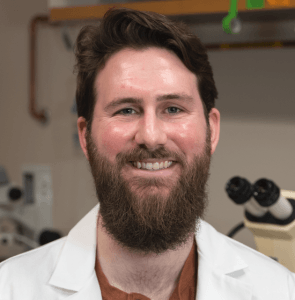 Dr. Lucas Restrepo received his B.S. in Biology from the Catholic University of America. After gaining research experience at Reaction Biology Corporation and Thomas Jefferson University, he earned his Ph.D. in Biomedical Sciences from the University of Massachusetts Chan Medical School, where he discovered a novel gene regulating mitochondrial clearance during development. Dr. Restrepo is currently a postdoctoral fellow in the laboratory of Dr. Philip Campbell at the University of Pennsylvania.
His research focuses on how neuropsychiatric disease genes shape brain development, using zebrafish as a model to study the genetic causes of schizophrenia and autism. Dr. Restrepo’s goal is to have an independent lab studying the intersection of mitochondria, autophagy, and neurodevelopmental disorders.
About the Brody Fellowships
The prestigious fellowships provide two years of support for full-time postdoctoral fellows in the early stages of their research into cutting-edge treatments for diseases that have a substantial societal impact and for which no consistently effective cure presently exists.
The fellowships are awarded from an endowed fund established by Sara Brody in memory of her brother, Dr. Louis Brody, her parents Dora and Hans Brody, her sister Ida Brody, and her brother Benjamin Brody. Dr. Brody was a police surgeon and a family practitioner.
In selecting recipients, the Board of Managers of Philadelphia Foundation is advised by a distinguished panel of physicians and scientists with expertise in medical research convened by The College of Physicians of Philadelphia. Fellowships are available to applicants who will be doing their research at Drexel University College of Medicine, Temple University School of Medicine, and The University of Pennsylvania.
About Philadelphia Foundation
Philadelphia Foundation is one of the country’s first publicly supported community foundations and the largest devoted to improving lives in Greater Philadelphia. For over a century, community members, civic and business sector leaders, and nonprofit organizations have turned to us for partnership and collaboration in responding to community needs and creating opportunities for impact. In our work as a civic catalyst, trusted partner, and strategic problem-solver, we seek to strengthen the economic, social, and civic vitality of the region. Our philosophy is that providing civic and community leadership is necessary for effective philanthropic leadership. For more information, visit www.philafound.org.